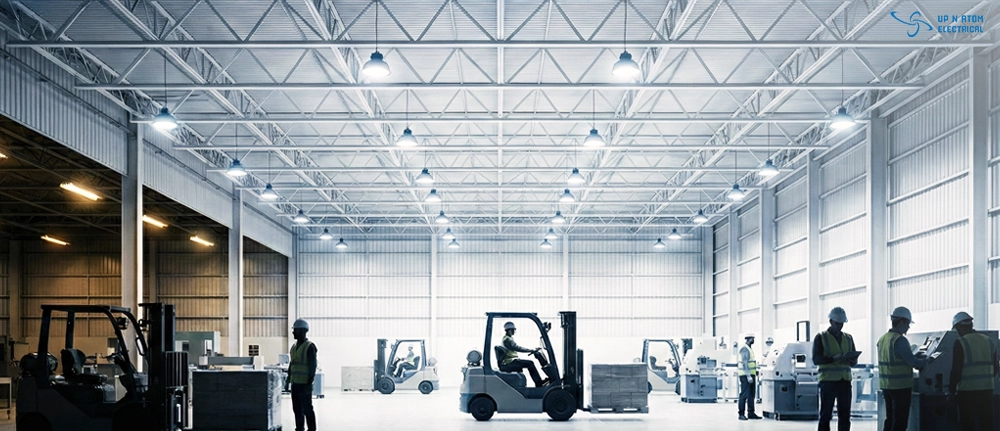
Embracing the advantages of industrial lights offers the foundation for a safe and profitable facility. Reliable illumination guarantees operations run smoothly while keeping energy costs low.
Neglecting these benefits leads to inflated expenses and safety risks that managers cannot afford. Flickering bulbs in a high-ceiling warehouse actively hurt productivity and endanger staff. And when lighting fails, work stops, and repair costs eat into your budget.
The solution lies in upgrading to an industrial lighting system built with aviation-grade strength. This provides a permanent fix to these costly interruptions. If lighting is durable enough for a busy runway, it delivers unmatched reliability for your factory floor as well.
The Core Advantages of Industrial LED Lights
Switching to modern lighting offers benefits beyond just brightness. The advantages of industrial lights become clear when you look at performance data. High-quality industrial lights transform how a facility operates. They improve visibility and reduce waste.
The shift to LED technology also created a new standard in the electrical industry. These fixtures survive harsh conditions that would destroy standard bulbs.
Here are the main benefits you can expect from installing proper industrial lights:
Unmatched Energy Efficiency
The main reason to upgrade is the drop in power use. If you are curious about the advantages of an LED bulb for industrial lighting, LED technology in industrial lighting uses much less electricity than older lamps.
In fact, the industrial lights include better light spread with less power. Hence, you do not lose brightness to save money. You can also save up to 70% on energy costs just by changing fixtures.
This efficiency leads to a fast Return on Investment (ROI). You quickly recover the cost of buying industrial lights through lower energy bills. Large operations running 24 hours a day see these returns even faster, making this upgrade a wise financial choice.
Durability in Extreme Environments
Warehouses and airfields are tough places for fragile gear. Standard bulbs cannot handle the vibrations and dust found in these places. Industrial lights are made to resist these factors without breaking.
- Vibration Resistance. Heavy machines create vibration. This can break delicate parts in old glass bulbs. Meanwhile, industrial lights use solid technology that withstands this stress. This ensures your lighting system stays on even when heavy equipment is running nearby.
- Temperature Tolerance. Many industrial zones experience intense hot or cold temperatures. Industrial lights work perfectly for this, as they do not lose brightness or flicker at any temperature. This reliability is one of the key advantages of industrial lighting for outdoor spaces.
- Ingress Protection (IP Ratings). Dust and moisture destroy standard electrical fixtures. High-quality industrial lights have high IP ratings, which seal out dirt completely. This protection prevents internal rust that can lead to early failure.
Instant-On Capabilities & Safety
Old lighting systems take time to warm up, which can be dangerous, especially during a power outage. One significant advantage of industrial lights is that they turn on instantly. LED industrial lights give 100% output the moment you flip the switch.
Since industrial lights do not flicker, their consistency in lighting also reduces eye strain and fatigue for workers. With well-installed industrial lights, this confirms your team can see clearly from the start of their shift.
Industrial vs. Commercial Lights: What’s the Real Difference?
You might have experienced installing an office light in a factory environment, only for it to fail early. Truly, it is easy to mix up commercial specifications with industrial requirements. What is the difference between industrial and commercial lights? The main distinction lies in the design purpose and build quality.
Commercial lights are designed to look stylish in offices, while industrial lights are built solely for function and durability, especially for outdoor use.
So, what is the difference between industrial and commercial lights?
Commercial Lights: Designed for Controlled Spaces
Commercial lighting creates a pleasant atmosphere in residential and commercial settings, including shops and offices. These fixtures are for clean areas where the temperature remains constant. Using them in a warehouse ignores the superior advantages of industrial lights. It often leads to more expensive replacements.
- Aesthetics Over Function. Commercial lights often feature stylish designs as lighter, more visually appealing materials are used. However, they lack the physical strength found in industrial lights. They cannot handle impacts.
- Lower Usage Hours. These lights run for 10 to 12 hours a day. Definitely, they are not made for the heat of 24/7 operation. This limited cycle means they overheat quickly if used like industrial lights.
- Minimal Ingress Protection. Commercial units are for dry, dust-free areas, and they have lower IP ratings. If you put commercial lights in a dusty warehouse, dirt can get inside, damaging the electronics. This mistake costs more in the long run, negating the advantages of industrial lighting.
Industrial Lights: Built for Heavy-Duty Application
Industrial lights are designed to withstand harsh conditions, including outdoor use. They often run 24 hours a day without a break. The heat control systems in industrial lights are advanced, and they can handle this constant heat well.
- High Ceilings. Factories often have ceilings that are 10 to 30 metres high. Industrial lights have high output to push light down to the floor. Standard fixtures cannot provide enough light from that height.
- Hazardous Materials Certification. Some zones contain flammable gas or dust. Specialised industrial lights are explosion-proof. They are certified for dangerous places. This safety feature is missing in commercial options. It is required by law in many zones.
- Superior Build Materials Manufacturers build industrial lights using aluminium and strong glass. These materials are more impact-resistant and rust-resistant than plastic. This strong build is one of the lasting advantages of lights that are for industrial.
Spotlight on Aviation: LED Runway and Taxiway Industrial Light

Airfields are among the toughest places for lighting, as the requirements go far beyond simple brightness. They involve precise guidance and strict rules. Aviation pros rely on the advantages of industrial lights to keep pilots safe.
Runway lights must meet strict standards set by the Civil Aviation Authority (CAA). These industrial lights must work perfectly regardless of the weather, as a failure here is a significant safety risk for planes.
Why Airfields Are Switching to LED
Airports are quickly moving from halogen to LED technology. This shift happens because modern tech performs better.
Here is why facilities choose LED industrial lights over older options:
- Superior Visual Clarity. The clarity provided by LED industrial lights is great for pilots. The colours are distinct, and the light cut-off is sharp, helping pilots see the runway clearly.
- Consistent Light Output. One of the specific advantages of industrial lights in aviation is steady output. Halogen bulbs get dimmer as they age. On the other hand, LEDs maintain their brightness throughout their lifetime.
- Massive Energy Savings. Energy use is a huge factor for large airports. Running runway lights all night uses a lot of power. By using energy-efficient industrial lights, they can reduce this power load, thereby lowering costs for airports.
The Upgrade Path: Retrofitting Airfield Lighting
Upgrading an airfield does not always mean digging up the runway. Modern industrial lights often fit into existing setups. This retrofit capability allows airports to install new tech with less disruption.
- Compatibility with Existing Transformers. You do not need to replace the whole electrical system. Several new LED industrial lights are compatible with existing regulators, simplifying installation.
- Reduced Downtime. Airports have tight schedules, and closing a runway is costly. The process for modern industrial lights is as quick as quick connections, helping technicians reopen the runway more quickly.
- Compliance Verification. When you upgrade to new industrial lights, you also verify compliance with safety rules. Older systems may stop meeting rules over time. A retrofit is the perfect chance to recheck your systems.
The “Hidden” Advantage: Reduced Maintenance Costs
Most people concentrate on saving power. However, maintenance is where you save real money. The advantages of industrial lights include fewer bulb changes. You might miss this benefit until you check the real costs.
Changing a bulb in a high warehouse is not as simple as it might seem, as it often requires renting scissor lifts. You also have to pay a qualified electrician. This makes a simple bulb change very expensive.
The Cost of Operational Disruption
Every time a light fails, your operations halt. Since high-quality industrial lights last 5 to 10 times longer than old bulbs, your team faces far fewer interruptions. This reliability helps you avoid specific, costly scenarios that hurt your bottom line.
Here are some examples of how light failures impact operations:
- Warehouse Downtime. In a logistics hub, a blown bulb forces you to block an aisle while you bring in repair equipment. You need ample floor space for a lift, which slows down packing and delays shipments to customers.
- Airfield Delays. On an airfield, the stakes are higher. A failed light might delay flights or force diversions. Ground crews need time to fix the runway safely. One of the main advantages of industrial lighting is preventing these costly interruptions to keep your facility running smoothly.
Safety During Maintenance
Replacing lights at height introduces a fall risk for your maintenance staff every time they go up. Minimising the number of times they need to climb to the ceiling improves overall workplace safety. Reliable industrial lights help keep your feet on the ground for longer by addressing specific physical risks.
- Reduced Fall Risk. By installing long-life fixtures, you significantly reduce the frequency of high-work scenarios. This reduces the chances of accidents on your site, a significant benefit of durable lighting.
- Predictable Failure Modes. Industrial lights rarely explode or fail instantly like older bulb types. Instead, they typically dim gradually at the end of their life. This gives managers time to plan replacements during scheduled downtime rather than rushing to fix an emergency blackout.
If you wonder why industrial lighting is essential, picking these long-lasting fixtures lessens the high costs associated with sudden shutdowns and repairs. This creates a direct financial advantage by keeping your maintenance budget under control.
Conclusion
Investing in quality lighting is a smart move. The advantages of industrial lights include lower bills and better safety. Whether you manage a warehouse or an airstrip, the right gear keeps things moving. Modern industrial light offers a clear path to better efficiency.
At Up N Atom Electrical, we specialise in certified airfield lighting across New Zealand and provide expert industrial electrical solutions in Auckland. We help you navigate the technical requirements for installing residential, commercial, and industrial lighting systems that last.
Bring the uncompromising safety standards of an airfield directly to your own facility with our heavy-duty industrial lighting. Contact us today to secure your facility with the proven advantages of industrial lights.
FAQ Schema Questions
Why is industrial lighting necessary for safety?
Industrial lights ensure that workers can clearly see hazards, machinery, and walkways. Poor visibility is a leading cause of accidents in warehouses and factories. Hence, proper illumination helps prevent trips, falls, and collisions.
What is an advantage of using an LED bulb for industrial lighting?
The primary benefit is the significant reduction in energy usage, combined with a long lifespan. This lowers your monthly overheads while also reducing maintenance labour and replacement part costs.
How do runway LED lights differ from standard industrial LEDs?
Runway lights must meet specific aviation standards for colour, intensity, and beam pattern. While they share the durability advantages of industrial lights, they are engineered for pilot guidance. They also need to withstand the impact of aircraft tyres and extreme weather on an open tarmac.
