Airfield ground lighting keeps a runway safe and open for all flight traffic. When small wiring faults occur, they can lead to sudden runway closures that cost both time and money. When airfield lights fail during a storm or a late-night landing, the safety of everyone on the tarmac is at risk. These problems often come from old cables that wear out after years of use without showing clear signs on the surface.
Safety depends on a plan to swap out old parts before they break. Many operators miss the signs of cable wear until a blackout occurs. Hence, knowing why cables fail helps you schedule updates before the airfield lights stop working. This keeps the facility in line with safety rules and prevents the stress of downtime.
What is Airfield Ground Lighting?
Airfield ground lighting refers to the set of lamps and signs that help aircraft move safely on a runway. These parts sit on the ground or within the pavement to guide pilots when visibility is poor. This system includes everything from approach lamps to taxiway markers and runway edge sets.
All parts of the airfield ground lighting work together to create a visual map of the airport. These airfield lights use specific colours and patterns to guide pilots. This system relies on a network of power units to stay active at all times.
Why is Airfield Ground Lighting so important for Pilots?
A pilot relies on airfield ground lighting to stay oriented during every phase of a flight on the ground. These visual markers provide the information needed to keep the plane in the right spot.
- Directional Awareness. The airfield ground lighting tells a pilot exactly where the runway starts and ends. This helps them stay on the centre line during take-off and landing. It reduces the risk of taking the wrong path.
- Safety at night. Pilots find it hard to see the ground when the sun goes down or during a storm. The airfield ground lighting provides a bright glow that cuts through the darkness, enabling safe landings in the middle of the night.
- Avoiding collisions. Clear signals from the airfield ground lighting show where a plane should stop. These indicators prevent different aircraft from colliding on the same strip. Ground crews also use these airfield lights to avoid active zones.
- Precision approaches. Specialised airfield ground lighting helps a pilot align the plane with the runway while still in the air. These visual aids show if the aircraft is too high or too low during the final descent.
- Taxiway navigation. Complex airports have many paths that can confuse a pilot after they land. The airfield ground lighting serves as a roadmap to guide the plane from the runway to the correct gate.
Why is Visual Guidance So Important?
Visual guidance is the primary source of information when other systems are insufficient. High-quality airfield lights offer instant cockpit feedback on the aircraft’s position.
- Depth Perception. Modern airfield ground lighting helps a pilot judge their distance from the ground. This makes it easier to time the landing and touch down smoothly. Without these airfield lights, a pilot might struggle to gauge their speed and height.
- Navigation in fog. Heavy rain can hide the runway from view until the last second. The airfield ground lighting provides a steady beacon that guides the plane safely to the gate.
- Easy Communication. Different colours in the airfield ground lighting send specific rules to the pilot. For example, red lights might signal the end of a runway. These visual cues are easy to understand and provide immediate instructions.
Understanding Airfield Lighting Cables and Their Role
Wiring that stays hidden is the primary power source for the entire airfield ground lighting network. They carry electricity to every lamp on the runway, taxiway, and approach paths. Because they sit in the ground, they must endure constant pressure from heavy planes and changing moisture levels. Without these durable wires, the airfield lights would have no way to stay active during a flight.
Why Are Airfield Lighting Cables Essential?
The reliability of the airfield ground lighting depends on the health of these buried power lines. Keeping them in good shape helps avoid the sudden loss of visual guides that pilots need most.
- Safety Assurance. Cables that work correctly prevent airfield ground lighting failures to avoid plane mishaps. These connections guarantee every lamp stays lit during high-stakes landings. Keeping the power steady removes the danger of sudden darkness for pilots.
- Regulatory Compliance. Airports must adhere to ICAO, FAA, and CAA standards for airfield ground lighting for regular inspections and replacements. Following these rules ensures the facility meets local and international safety expectations.
- Operational Continuity. Reducing the risk of unexpected failures minimises flight delays and costly repairs. A smooth electrical system allows traffic to move without the threat of a sudden runway closure. Fixing small issues early prevents larger problems that disrupt daily schedules.
- Energy Efficiency. Modern cables support LED upgrades, becoming the industry standard for improved visibility and lower energy consumption. These updated wires carry power more effectively and reduce the amount of electricity wasted as heat.
When Should Airfield Lighting Cables Be Replaced?
Determining the right time for replacement is important to avoiding unexpected failures that could compromise runway safety and compliance. Managers must track the performance of their airfield lights to identify when a full replacement is necessary. This approach deters sudden power loss during a flight.
Signs Your Airfield Lighting Cables Need Urgent Attention
Knowing the warning signs of deteriorating airfield lighting cables is key to preventing failures. Here are the most common indicators that replacement is due:
- Intermittent or Flickering Lights. If the airfield lights start to blink or turn off without warning, the wiring is likely failing. This often happens when a connection becomes loose or moisture gets inside the cable jacket. It creates a dangerous distraction for pilots who need a steady glow to navigate.
- Physical Wear & Insulation Damage. Exposure to moisture, temperature fluctuations, and aircraft loads can cause cracks, cuts, or corrosion in the airfield ground lighting cables. This decay allows water to enter the system and causes short circuits, leading to sudden failures.
- Increased Electrical Resistance. Measurable changes in resistance mean worn conductors, reducing efficiency and increasing power loss in the airfield ground lighting system. This strain forces the system to draw more energy, potentially leading to overheating of electrical components.
- Compliance Failures. Routine inspections revealing non-compliance with ICAO or FAA standards signal the need for upgrades. Failing these checks means the system is legally unfit for use and creates serious liability risks for the operator.
The Recommended Replacement Timeline
On average, airfield ground lighting cables last 10–15 years, depending on usage, weather conditions, and maintenance practices. At least once a year, they are inspected daily to see if replacement is needed before they completely fail.
How to Replace Airfield Lighting Cables Correctly
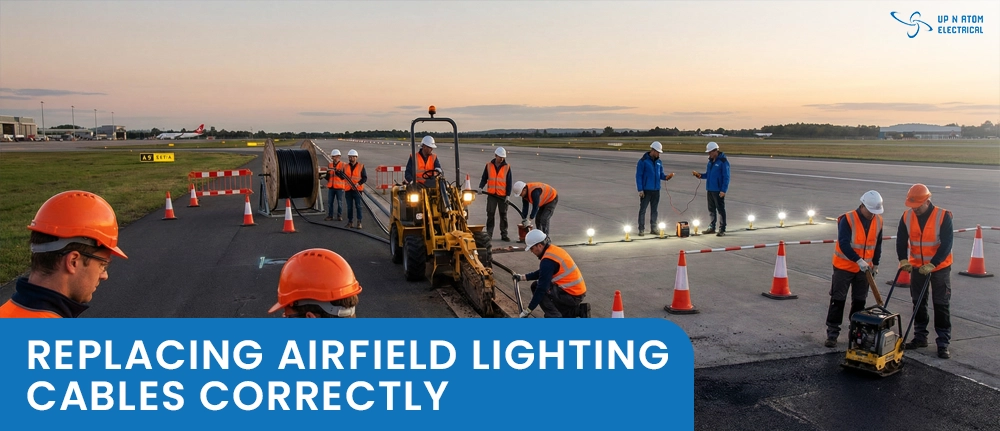
Replacing airfield ground lighting cables demands precision, expertise, and adherence to regulations. Here’s a step-by-step guide to ensure a smooth and compliant process.
Step 1: Inspection & Fault Detection
Assess the current state of the airfield ground lighting to find where the problems hide. Specialised tools help identify weak spots in the electrical flow.
This includes:
- Voltage-drop tests to verify power consistency.
- Insulation resistance measurements to spot early-stage wear.
- Fault location analysis to pinpoint damaged sections.
Step 2: Excavation & Trenching
Trenching is crucial for accessing and removing old wiring from buried airfield cables. Airports can opt for directional drilling to minimise surface disruption, especially in high-traffic zones.
Step 3: Safe Removal of Faulty Cables
Pulling out old, brittle wires needs a gentle touch to protect the rest of the airfield ground lighting network. Clear the area thoroughly so the new installation can begin without any debris left in the ducts.
During removal, it’s important to:
- Avoid damaging adjacent cables still in operation.
- Follow environmental disposal guidelines for old wiring.
Step 4: Installation of New Cables
Using long-lasting materials, the next step is to install high-quality ground wires to power the airfield ground lighting.
To ensure the new system stays reliable, follow these installation standards:
- Aviation-grade, insulated and shielded to withstand harsh conditions.
- Properly routed through ducts to avoid interference.
- Tested for grounding and insulation resistance before activation.
Step 5: System Testing & Calibration
After the new cables are in place, verify that the airfield ground lighting works as intended, ensuring the lamps are the correct brightness and the circuits are stable for long-term use.
Once installation is complete, a licensed airfield lighting electrician will:
- Verify proper voltage levels.
- Do photometric testing to ensure uniform light output.
- Confirm regulatory compliance with ICAO/FAA/CAA standards.
Step 6: Surface Restoration & Cleanup
The final stage of the project involves fixing the ground so the runway can return to normal service. Also, leave the site in top condition to ensure no hazards remain for the planes or ground crews using the airfield ground lighting.
Any excavation work must be properly restored to prevent operational hazards. Airports typically use fast-curing asphalt or concrete to minimise downtime.
Preventative Maintenance: Extending the Lifespan of Airfield Lighting Cables
Implementing a proactive maintenance strategy for airfield ground lighting can help airports lessen costs, improve reliability, and extend the service life of their lighting infrastructure.
Proactive maintenance can significantly extend the life of airfield lighting cables and reduce the need for emergency replacements of airfield lights. Here’s how:
- Routine Electrical Testing. Regular checks identify minor issues before they escalate.
- Sealed Joints & Terminations. Prevents moisture intrusion, a leading cause of electrical failure.
- Upgrading to Modern, Weather-Resistant Cables. Newer materials offer greater durability in extreme conditions.
- Smart Monitoring Systems. Airports increasingly integrate real-time fault-detection technologies to continuously monitor the electrical integrity of airfield lights.
Why Hiring an Airfield Lighting Electrician Is Essential
Airfield ground lighting repairs in NZ require specialised expertise due to the complexity of high-voltage circuits and aviation regulations.
Hiring a qualified airfield electrician in NZ ensures:
- Compliance with ICAO & FAA standards
- Safe handling of high-voltage airfield circuits
- Minimised downtime and operational disruptions
- Expert installation using advanced diagnostic tools
Future Trends in Airfield Lighting Cable Technology
Airports worldwide are investing in new ways to improve their airfield ground lighting infrastructure. These updates focus on making the systems more reliable while reducing the work needed to keep them running.
Some key advancements include:
- LED Integration. This reduces energy consumption and enhances visibility across the entire airfield ground lighting network. LED lamps provide a crisp light that helps pilots navigate easily in poor weather. These units last longer than traditional bulbs and put less stress on the electrical system.
- Smart Cable Monitoring. Sensors that detect faults in real time to prevent sudden outages. These devices send data directly to maintenance teams so small issues can be fixed before they escalate. This technology helps avoid the complete failure of the airfield lights.
- Eco-Friendly Cable Materials. More sustainable, weather-resistant options for airfield ground lighting installations. These materials provide stronger protection against soil chemicals and moisture. Using these durable parts helps extend the time between full system replacements.
Prioritise Airfield Lighting Cable Replacement for Long-Term Safety
Neglecting to replace airfield lighting cables can lead to serious safety hazards, regulatory penalties, and costly operational disruptions. By monitoring cable conditions, adhering to best-practice replacement procedures, and partnering with certified airfield lighting electricians, airports can ensure efficient operations and enhance aviation safety.
If your airfield lighting system has signs of wear, power fluctuations, or regulatory non-compliance, don’t wait until failures disrupt airport operations. Schedule a professional inspection with Up N Atom today to keep your lighting infrastructure in optimal condition.
Need expert airfield lighting repairs in NZ? Contact a certified airfield electrician in NZ for extra safety, efficiency, and compliance with aviation standards.
Frequently Asked Questions
What is airfield ground lighting (AGL) and why is it important for NZ airports?
Airfield ground lighting consists of electrical lamps and signals that guide aircraft safely during taxi, takeoff, and landing. These systems are essential for NZ airports to maintain high safety standards and keep runways open during frequent rain and fog in regions like Auckland.
What are the main types of AGL used at aerodromes?
- Approach lights. These provide a visual path for pilots to align the plane with the runway during the final landing phase of the airfield ground lighting system.
- Runway lights. These mark the edges and the centre line of the landing surface, showing pilots where the airfield lights and pavement end.
- Taxiway lights. These guide the aircraft safely from the landing strip to the gates using specific colours in the airfield ground lighting network.
How does AGL improve safety in low visibility/night operations at NZ airfields?
Airfield ground lighting provides pilots with a clear path when it is dark or when fog and rain obscure the ground. These signals allow for precise steering and help the plane stay on the correct path during a night landing. Using these airfield lights makes every arrival much safer for the crew and passengers.
What causes AGL failures, and how can NZ airfields reduce outages?
Most outages in airfield ground lighting occur when water enters the cables or heavy aircraft crush the wires. NZ airfields can reduce these problems by testing the system often and replacing old parts before the airfield lights start to blink. This proactive work stops small faults from turning into big failures.
How often should AGL systems be inspected and maintained in New Zealand?
Local aviation rules require daily checks and more detailed electrical testing of the airfield ground lighting every few months. Keeping a strict schedule for these inspections helps identify weak spots in the cables before they lead to a total system failure.
What’s the difference between aeronautical ground lighting and runway lighting terms?
Aeronautical ground lighting is the broad term for all visual aids at an airport, including the airfield ground lighting network. Runway lighting is a specific part of that system that focuses only on the lamps directly on the landing strip.
Can Auckland-based aviation electricians support AGL maintenance across NZ?
Our specialist teams can travel from our base to support airfield ground lighting projects at any airport or private strip in the country. We have the technical expertise to keep airfield lights compliant and reliable for all NZ aviation operators.
