Industrial lighting is one of those things that only gets attention when something goes wrong. A fitting fails, visibility on the floor drops, and energy bills creep up. Suddenly, a problem that’s been building for months becomes urgent.
The trouble is, reactive maintenance on industrial sites costs more than it should. This guide covers the key warning signs that your industrial lights need changing.
Quick Answers:
- Repeated lamp failures, flickering, and rising maintenance costs are the clearest early signs.
- Outdated lighting can create compliance exposure under New Zealand workplace health and safety obligations.
- An LED retrofit or upgrade often delivers better long-term value than ongoing repairs on ageing systems.
- Qualified industrial lighting specialists can assess your site and recommend the right direction forward.
Why Industrial Lighting Maintenance Matters
Safety, visibility, and workflow
On an industrial site, lighting isn’t a comfort issue. It’s a safety-critical system. Poor visibility contributes to missed hazards, equipment errors, and slower, less accurate work.
The AS/NZS 1680 standard sets minimum illuminance levels for interior and workplace lighting in New Zealand, with specific requirements for industrial tasks. When your lighting falls short of those levels, the risk to people and operations rises.
Why poor maintenance leads to avoidable downtime
A fitting that flickers or fails doesn’t just reduce visibility. It can take a section of the floor offline while repairs are arranged. On a busy site, that kind of unplanned downtime adds up quickly. Proactive lighting maintenance catches deteriorating components before they create disruption.
Why you need to be proactive with industrial lighting in NZ
New Zealand sites face a range of environmental pressures, including humidity, temperature variation, dust, and vibration, that accelerate wear on lighting systems. A preemptive inspection and maintenance programme keeps your industrial lighting setup in NZ performing reliably rather than lurching from fault to fault.
New Zealand sites face a range of environmental pressures, including humidity, temperature variation, dust, and vibration, that accelerate wear on lighting systems. A preemptive inspection and maintenance programme keeps your industrial lighting setup in NZ performing reliably rather than lurching from fault to fault.
1. Your Industrial Lights Flicker, Dim, or Fail Too Often
What repeated lamp or fitting failure can mean
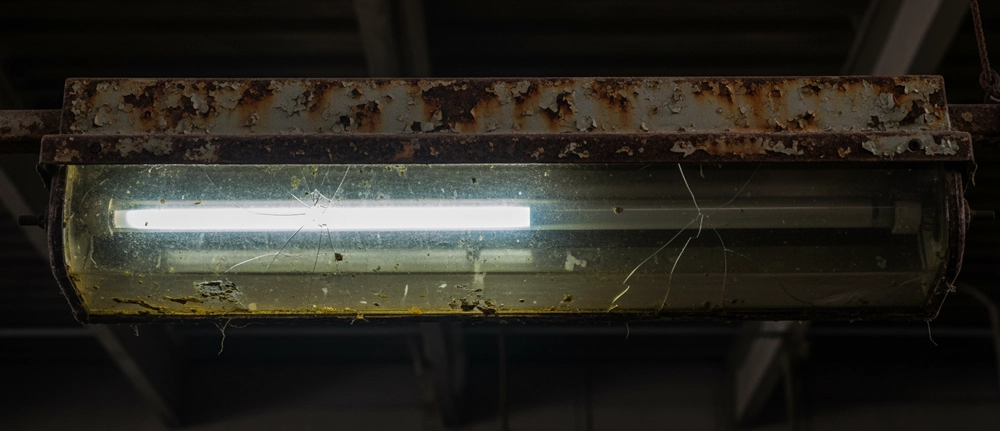
The occasional lamp replacement is normal. But when fittings fail repeatedly, that pattern points to something deeper. Ageing ballasts, failing drivers, deteriorating wiring, or fittings that have simply reached the end of their serviceable life are all common reasons.
Why uneven light levels create site risk
Flickering and dimming are more than an irritation. Uneven light levels create unstable conditions on the floor. This includes:
- Patches of shadow near machinery
- Reduced visibility at workstations
- Contrast issues make it harder for workers to judge depth and distance accurately.
These aren’t minor inconveniences on an industrial site.
When recurring faults point to a larger upgrade issue
If the same fittings keep failing, it’s worth asking whether repairs are solving the problem. Repeated failures on older systems are often a signal that the system as a whole needs reassessment rather than patching.
2. Maintenance Costs Keep Adding Up
When constant repairs stop being cost-effective
There’s a crossover point at which ongoing repair costs exceed the cost of an upgrade. If the same section of lighting keeps being repaired, the overall cost can be significant. This is before factoring in lost productivity during down times.
Why old industrial lighting often costs more to keep running
Older fluorescent and metal halide systems carry hidden running costs beyond energy use. Spare parts become harder to source as systems age. Labour time per repair stays roughly constant but yields diminishing returns. The older the system, the less you get back from each maintenance spend.
The hidden labour cost of ongoing lighting faults
Arranging access on an active industrial site means that even a simple lamp replacement has real labour costs. Multiply that across a system generating frequent faults, and the operational drag becomes a genuine budget issue.
3. Energy Use Is Higher Than It Should Be
Why do older industrial lights waste power?
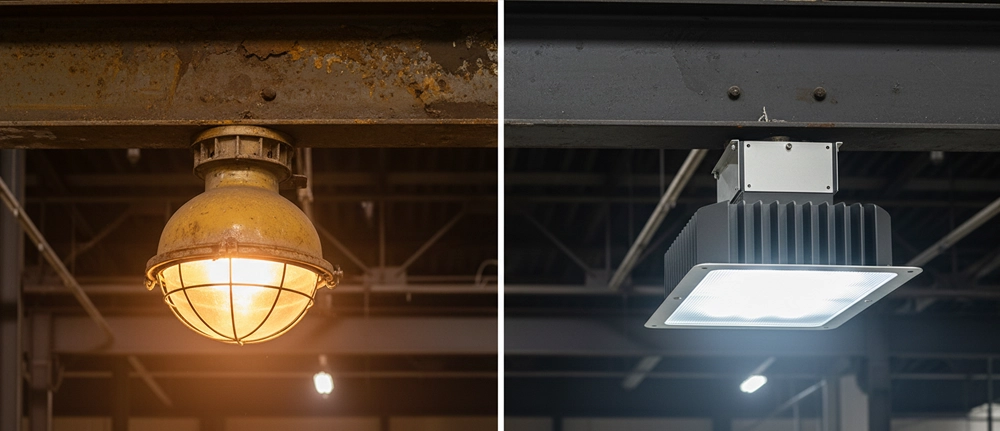
Legacy lighting technology, like metal halide and old fluorescent fittings, uses more power than modern systems. On a site running high-bay lighting across a large floor area for extended hours, that gap translates directly into power bill costs.
How can LED upgrades improve efficiency?
Industrial LED lighting uses up to 50 to 70 per cent less energy than metal halide equivalents at comparable lumen output. Modern industrial LED high-bay fittings also maintain their output more consistently over time, while older technology degrades progressively. That means you’re paying more for power for less usable light as the system ages.
When energy savings help justify an upgrade
For sites with high operating hours, the energy savings from an LED retrofit can recover upgrade costs within a few years. When you factor in reduced maintenance frequency and fewer labour callouts, the case for upgrading often makes more sense.
4. Light Levels No Longer Suit the Work Being Done
Why task visibility matters in industrial places of work
AS/NZS 1680 specifies illuminance requirements based on task type and risk level. Precision work, inspection tasks, and machine operation all require higher light levels than general movement areas. If your current workplace lighting was designed for one type of activity and the site’s work has changed, the current layout may no longer be adequate.
How poor light quality affects accuracy and safety
Low or uneven light increases error rates, slows inspection processes, and raises the likelihood of near accidents and incidents. It also adds to eye issues and fatigue over a full shift. That’s a less visible but real productivity cost that builds up over time.
Why changing site use may require a new lighting plan
If your site has expanded, been reconfigured, or adopted different processes, the current lighting design may have gaps. New racking layouts, added mezzanines, or different task areas can all create zones that the existing system wasn’t designed to serve well.
5. Your Site Has Safety or Compliance Concerns
How can outdated lighting raise workplace risks?
Under the Health and Safety at Work Act 2015, New Zealand businesses have a duty to provide and maintain a work environment that is safe and without risks to health. Inadequate, unreliable, or failing lighting contributes directly to that risk. It’s not just a performance issue. It’s a legal exposure.
Why inspections matter for industrial lighting in NZ sites
Regular electrical inspections of your lighting system help identify deteriorating components, wiring issues, and fittings that no longer meet required standards before they become incidents. WorkSafe New Zealand expects businesses to manage foreseeable hazards proactively. A documented inspection programme supports that obligation.
When compliance pressure pushes maintenance into upgrade territory
If an inspection identifies multiple fittings below required illuminance levels, physical damage, or wiring that no longer meets current standards, the remediation work can quickly add up to more than a staged upgrade would cost. At that point, upgrading makes more sense than ticking off a repair list.
6. The Lighting System Shows Signs of Age or Environmental Wear
Corrosion, water ingress, and damaged fittings
Industrial environments are hard on electrical equipment. Heat, moisture, vibration, chemical exposure, and physical impact all take a toll on industrial lights over time. Corroded housings, cracked lenses, failed seals, and signs of water ingress are all indicators that fittings are compromised in both performance and safety.
Why do harsh industrial environments shorten lighting life?
A fitting rated for a standard commercial environment will deteriorate more quickly in a food processing facility, a cold-store, a workshop, or a site with significant airborne dust or fumes. IP-rated fittings designed for the specific environment last significantly longer and maintain their performance more reliably.
When physical wear affects reliability
Visible damage to fittings, discolouration from heat, loose mountings, or signs of arcing are all reasons to replace rather than repair. A physically compromised fitting creates an ongoing safety risk that maintenance alone won’t resolve.
7. Repairs No Longer Match the Site’s Operational Specifications
When your business has outgrown the old setup
A lighting system that was adequate five years ago may not serve a site that has grown, changed its processes, or increased its operating hours. If the existing system is being stretched beyond what it was designed for, repairs keep a substandard setup running rather than solving the underlying mismatch.
Why expansions, new layouts, or new tasks change lighting needs
New building additions, layout reconfigurations, and different task requirements all create lighting needs that the existing design didn’t account for. Extending an old system to cover these changes often produces uneven results. It’s worth reassessing the whole setup rather than adding to a system that was already marginal.
How specialist lighting design supports better long-term results
A properly designed site lighting upgrade accounts for ceiling height, surface reflectance, task requirements, and emergency lighting obligations together. The result is a system that performs consistently rather than one that accumulates compromises over time.
Repair or Upgrade: Which Makes More Sense?
Situations where maintenance is still enough
- The system is less than 10 years old, and failures are isolated.
- Faults are in a single fitting or circuit rather than spread across the site.
- The site layout and work type haven’t changed significantly.
- An inspection confirms the larger system is in good condition.
Situations where full or incremental upgrades are smarter
- Repeated failures across multiple fittings or bays
- Maintenance costs are rising year on year, with no clear endpoint.
- Energy use is significantly higher than modern equivalents would produce
- The site has changed, and the existing lighting design no longer fits.
- An inspection identifies wiring, compliance, or physical condition issues.
Questions to ask before deciding
- How old is the existing system, and what is its remaining serviceable life?
- What have maintenance and energy costs been over the last 12 to 24 months?
- Has the site’s layout, use, or operational hours changed since installation?
- Would a staged upgrade deliver better value than continued repair?
What to Expect From Industrial Lighting Specialists
Site inspection and lighting assessment
A qualified specialist will assess your existing system against current task requirements and NZ standards, identify faults and areas of concern, and measure actual light levels against what the site needs. That assessment gives you a clear picture rather than guesswork.
Recommendations on repair, retrofit, or replacement
Not every site needs a full replacement. An experienced team will distinguish between fittings that are worth servicing, areas where an LED retrofit is the right call, and sections where full replacement is the only sensible option. You get a recommendation that fits the site, not a one-size approach.
Why qualified industrial lighting in NZ matters
Industrial lighting in NZ work must be carried out by registered electricians. On specialist sites, including those with hazardous areas, aerodrome proximity, or complex electrical networks, the qualifications and experience of the team matter beyond basic registration. Up N Atom’s industrial electrical team works across South and East Auckland and understands the exact demands of industrial site environments.
Not sure where your site stands? Get a Quote from our team or call us on 021 0240 3992 to arrange a site assessment.
FAQs About Industrial Lighting Maintenance
How often should industrial lighting be inspected?
Most industrial sites benefit from an annual lighting inspection as a minimum, with more frequent checks on systems operating in harsh environments or showing signs of deterioration. Emergency lighting systems have specific testing requirements under NZ standards.
When should industrial lights be upgraded instead of repaired?
When faults are recurring across multiple fittings, maintenance costs are rising without resolution, or the system no longer meets site requirements, these are the clearest signals that an upgrade is a better value than continued repairs.
What are the main signs of failing industrial lighting?
Frequent lamp or fitting failures, flickering, uneven light levels, visible physical damage or corrosion, rising energy costs, and light levels that no longer suit the work being done are all key indicators.
Why is industrial lighting maintenance in NZ important for safety?
Lighting is directly linked to workplace safety under New Zealand’s Health and Safety at Work Act 2015 and the AS/NZS 1680 standard. Inadequate or failing lighting creates foreseeable hazards that site managers have a duty to address.
Do LED industrial lights reduce running costs?
Yes. Industrial LED lighting typically uses 50 to 70 per cent less energy than older metal halide or fluorescent equivalents, requires less frequent replacement, and carries lower maintenance costs over its service life. For sites with high operating hours, the savings are sizable.
